

In September 2024 a report for the European Commission by Mario Draghi, the former president of the European Central Bank, argued that Europe faced a slow decline in its industrial base unless it invested far more and cut the cost of energy. Two years on, official statistics allow a check on where things stand.
The short version: energy is cheaper than at the peak of the crisis but still much dearer than before it; the industries that use most of it have not recovered; and governments have changed course in ways that would have been hard to imagine in 2021.
The energy gap
Eurostat tracks what businesses actually pay. For a mid-sized industrial user, the EU average price of electricity was about 13 cents per kilowatt-hour in early 2021. It peaked above 21 cents in 2023 and was 18 cents in the first half of 2026, around 40% higher than before the crisis. For natural gas the pattern is sharper: prices nearly tripled at the peak and remain roughly double their 2021 level.
Those figures predate most of the effect of the 2026 disruption to Gulf energy exports, which pushed European gas prices up again. The next half-yearly release will show how much.
Why does Europe pay more? It imports most of its gas, and since 2022 much of that arrives as liquefied natural gas by ship, which costs more than the Russian pipeline gas it replaced. Electricity prices in turn are often set by gas-fired power stations.
What happened to production
If expensive energy were damaging industry, the damage should be greatest where energy matters most. That is what the data show.
Eurostat’s production index sets 2021 at 100. Over the first nine months of 2026, euro-area manufacturing as a whole averaged 98.4, slightly below where it started. Chemicals, among the most energy-intensive sectors, averaged 78.3.
Germany, the bloc’s industrial centre, has fared worse than the average. Its manufacturing index has fallen every year since 2022 and stood at 91.6. The economy as a whole shrank in 2023 and 2024 and barely grew in 2025.
The car industry is a different story
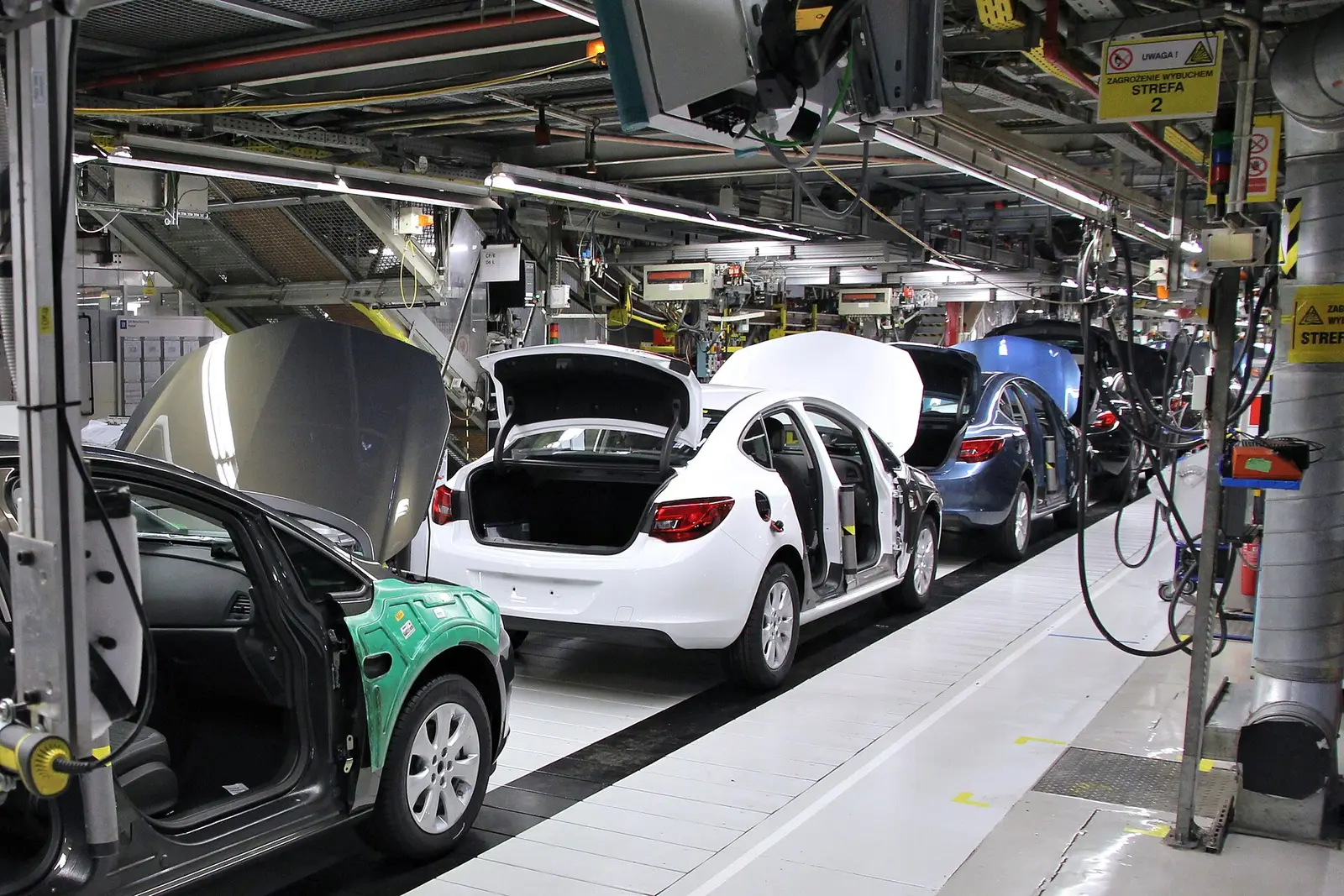
It is tempting to attribute everything to energy. The car industry shows why that would be wrong.
Volkswagen, Europe’s largest carmaker, sets out its difficulties in its annual report, and energy is not the main one. Competition in China “continued to negatively impact” deliveries in 2025, and the profit it earns from its Chinese joint ventures fell by almost half. US tariffs cost it €2.9 billion in the year. Demand for electric vehicles depends on subsidies that governments have been withdrawing.
So Europe’s industrial problem has at least two parts: a cost problem concentrated in energy-intensive sectors, and a competitive and trade problem concentrated in vehicles. They call for different remedies.
The policy response
Policy has moved on three fronts.
Fiscal. Germany long limited government borrowing through a constitutional “debt brake”. In March 2025 parliament amended it, exempting most defence spending and creating a €500 billion fund for infrastructure over twelve years. This is the largest shift in German fiscal policy in decades. How quickly the money is spent is a separate question.
Industrial. The Commission has published a series of plans, including a Clean Industrial Deal in February 2025 and a proposed Industrial Accelerator Act in March 2026 that would favour European-made goods in public purchasing. It has also proposed relaxing the requirement that all new cars be zero-emission by 2035. Most of these remain proposals.
Trade. A framework agreed with the United States in August 2025 set a 15% tariff on most EU exports, including cars, lower than had been threatened but far above the previous level.
Monetary policy has pulled the other way. The ECB cut interest rates through to mid-2025, which helps investment. In 2026, with inflation back at 4%, it raised them twice. Higher borrowing costs arrive just as governments are urging companies to invest.
The parts that are doing well
A picture of uniform decline would be misleading. Over the same months of 2026, manufacturing output was 15% above its 2021 level in Poland and slightly above it in Spain; both economies grew faster than the euro-area average in 2025. Production of “other transport equipment”, which includes aircraft, trains and military vehicles, is far above its 2021 level across the euro area. And some of Europe’s strongest companies are in sectors untouched by energy costs: ASML, in the Netherlands, holds a position in chipmaking equipment that no competitor has matched.
The weakness is concentrated: in particular industries, and in the country most reliant on them.
How to read what comes next
Three numbers will say most about whether the squeeze is easing.
- Industrial energy prices, published by Eurostat every six months. A return towards pre-crisis levels would remove the main handicap for energy-intensive producers.
- German manufacturing output, monthly. Growth driven by public spending alone would show up in GDP before it shows up here.
- Investment. The ECB reported that business investment in the euro area fell slightly in the second quarter of 2026. Draghi’s central argument was that Europe invests too little; that is the figure his report should ultimately be judged against.