
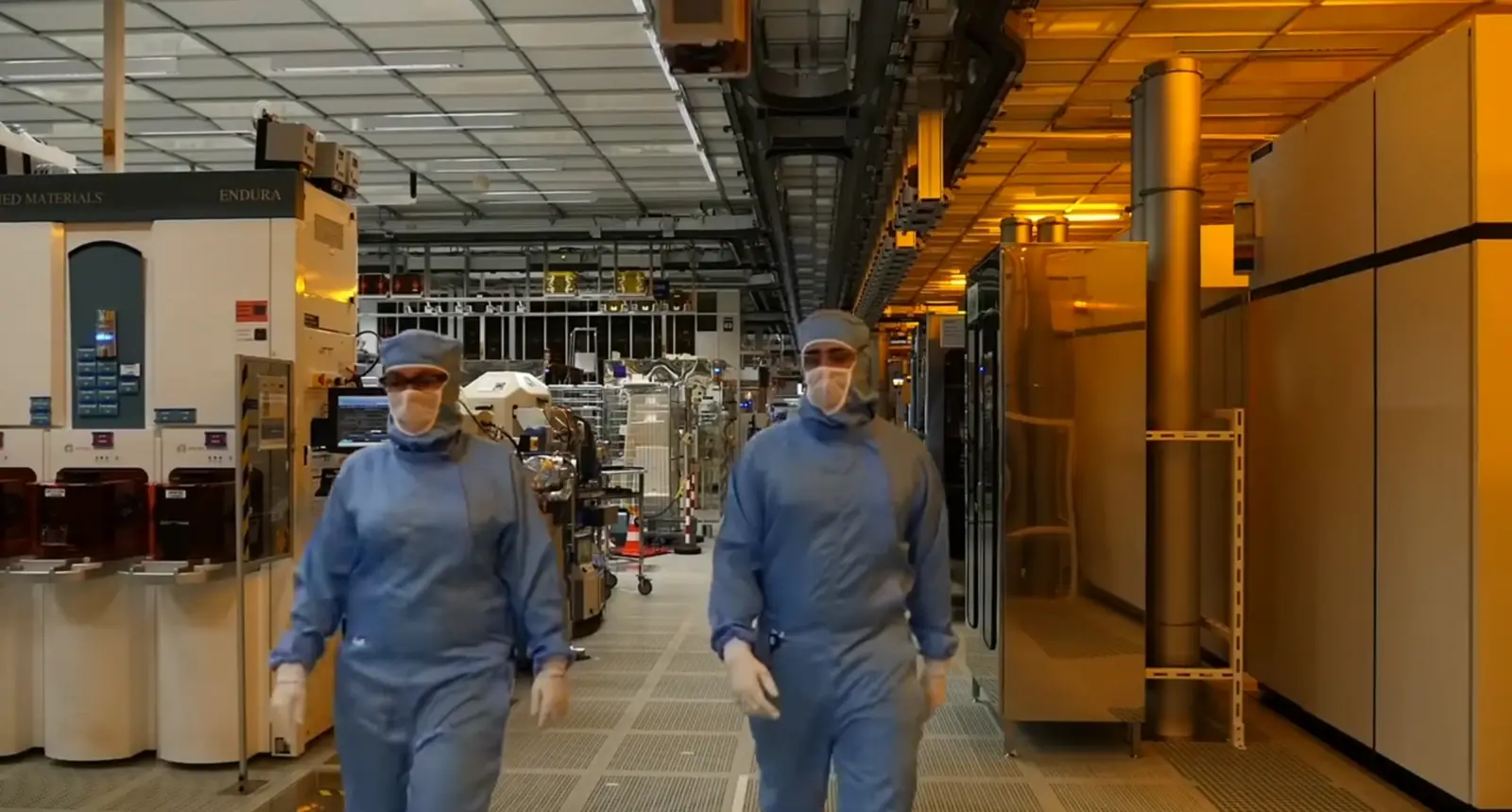

For decades, governments in advanced economies mostly left the location of factories to the market. Semiconductors have changed that. Within about two years, the United States, the European Union, Japan, South Korea and others all committed public money to bringing chip manufacturing within their borders.
Why chips
Two concerns sit behind the shift.
The first is concentration. Most of the world’s advanced logic chips are made in Taiwan and most memory in South Korea. The shortages of 2020–22, when carmakers halted production for want of inexpensive components, showed how much depends on a few sites.
The second is strategy. Chips are essential to artificial intelligence, communications and defence. Governments increasingly regard the ability to produce them as a matter of national security, the same reasoning that drives export controls.
What the programmes offer
The tools are similar everywhere: direct grants towards construction costs, tax credits for investment, low-cost loans, and funding for research and training.
- In the United States, the CHIPS and Science Act gave the Commerce Department $39 billion for manufacturing incentives and $11 billion for research. A separate tax credit for investment in chip plants began at 25% and was raised to 35% in 2025. Recipients accept limits on expanding advanced capacity in certain countries.
- In the European Union, the Chips Act loosened state-aid rules so that member states such as Germany can support “first-of-a-kind” plants. Most of the money comes from national budgets, not from the EU itself.
- Japan has subsidised both a TSMC-led plant in Kumamoto and Rapidus, a domestic venture aiming at leading-edge production.
From subsidy to ownership
In August 2025 the United States went a step further. Instead of paying Intel the grants it had been awarded, the government converted them into shares, taking just under a tenth of the company. Intel described the stake as passive.
This is a different kind of industrial policy. A grant buys a factory; a shareholding gives the state an interest in the company’s success or failure. Whether it becomes a model for other recipients is not yet known.
What has actually been built
Announcements are not outcomes, so it is worth separating the two.
Producing: TSMC’s first Arizona plant and its first plant in Japan both began production around the end of 2024.
Under construction: TSMC’s later Arizona phases, for which the company has twice enlarged its plans, and its joint plant in Dresden. Samsung Electronics is equipping its plant in Taylor, Texas. SK hynix has announced an advanced packaging plant in Indiana that it does not expect to operate before the second half of 2028.
Delayed: Intel’s Ohio project is now reported to be several years behind its original schedule.
What subsidies can and cannot do
A fabrication plant costs many billions of dollars, and running one outside the industry’s established clusters is more expensive: construction costs are higher, and experienced engineers and specialised suppliers are scarcer. A grant narrows the gap at the start. It does not remove the ongoing difference.
Nor does a new plant make a country self-sufficient. It still depends on chemicals, gases and equipment from around the world, as our overview of the supply chain across five economies shows.
Europe’s experience illustrates the limits. The EU set a goal of producing 20% of the world’s chips by 2030. Its own auditors concluded in 2025 that this was highly unlikely, forecasting a share of under 12%. The Commission has since proposed a revised act.
How to judge the results
The useful measures are slow and undramatic:
- Plants in production, not plants announced.
- Share of global capacity at each technology level, which industry bodies publish periodically.
- Cost and yield compared with established sites, usually visible only in company commentary.
The most that can be said today is that the map of semiconductor manufacturing has begun to spread. Whether the new plants prove competitive without continuing support is a question the next several years will answer.