

For most of the past three decades, a typical large Japanese company held a lot of cash, owned shares in its customers and suppliers, and paid out a modest share of its profits. Investors priced that in. In July 2022, according to the Tokyo Stock Exchange, 43% of Japanese listed companies traded below the value of their own net assets.
That is changing, under pressure from three directions at once: the stock exchange, the government’s rules on takeovers and governance, and, more recently, rising interest rates.
The exchange’s request
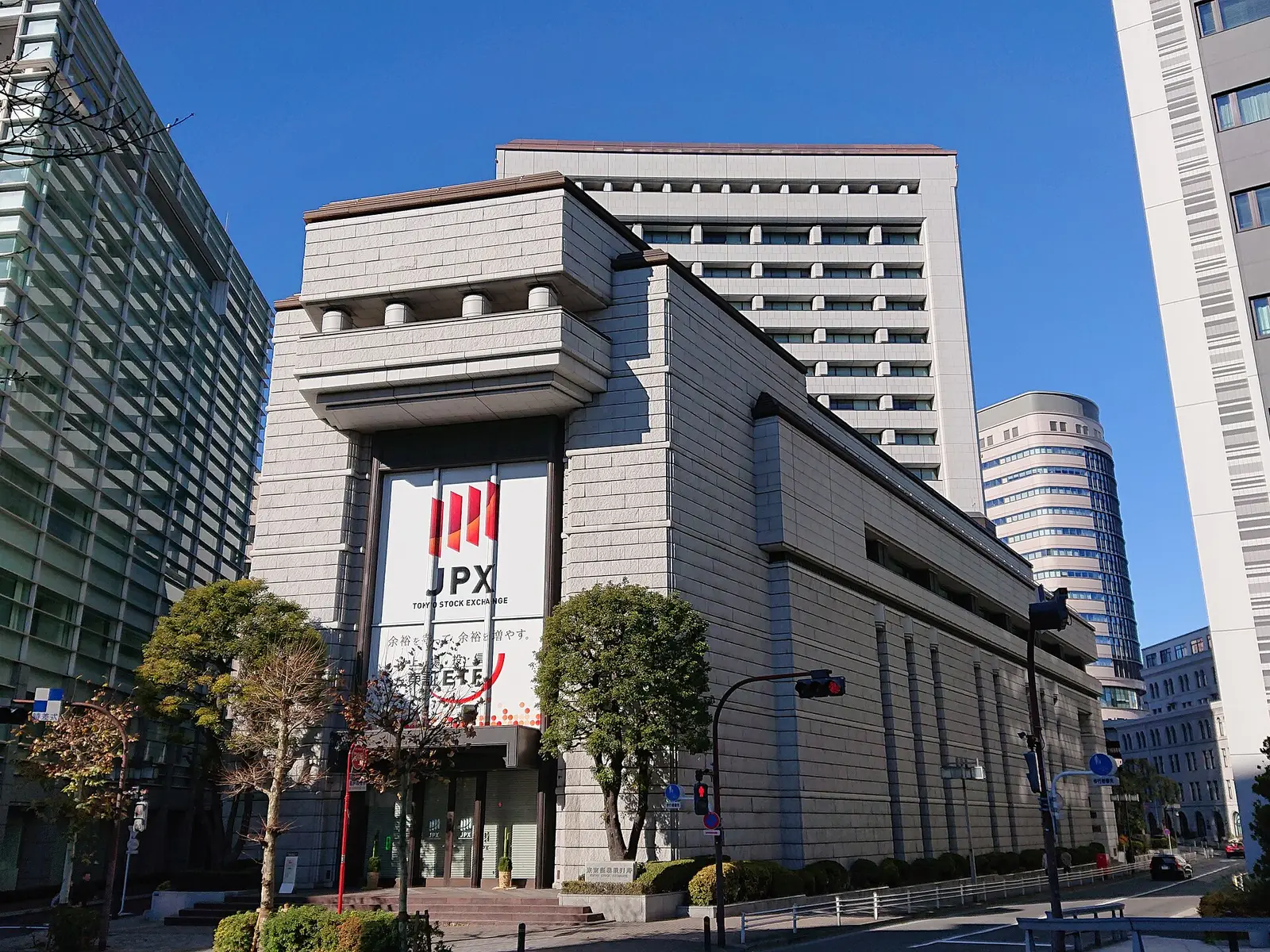
On 31 March 2023 the Tokyo Stock Exchange asked every company on its Prime and Standard markets to take “action to implement management that is conscious of cost of capital and stock price”.
The idea is simple. Shareholders’ money is not free; investors expect a return on it. A company whose shares trade below book value is, in effect, being told by the market that its assets would be worth more in other hands. The exchange asked boards to measure their cost of capital, compare it with their returns, and publish a plan.
It was a request, not a rule, but the exchange made compliance visible. Since January 2024 it has published a monthly list of companies that have disclosed plans. A TSE official wrote in October 2025 that the disclosure rate among Prime Market companies had exceeded 90% since March 2025, against about half on the Standard Market. Over the three years from July 2022, the average price-to-book ratio of Prime companies rose from 1.1 to 1.4, and average return on equity from 8.4% to 9.0%.
The exchange updated its request in April 2026 and published a review of the fourth year in October. Its message has shifted from disclosure to substance. It says buybacks and dividend increases can be effective, but that it is “not necessarily expecting companies to use only these”, and wants investment in growth instead of one-off gestures.
Where the money has gone
The Ministry of Finance’s annual survey of corporations shows the change in payouts clearly.
| Companies excluding finance and insurance | Year to March 2022 | Year to March 2026 |
|---|---|---|
| Net profit | ¥63.0 trillion | ¥96.6 trillion |
| Dividends | ¥29.9 trillion | ¥46.0 trillion |
| Dividends as share of net profit | 47.4% | 47.6% |
| Retained earnings | ¥516.5 trillion | ¥654.8 trillion |
| Cash and deposits | ¥281.0 trillion | ¥315.0 trillion |
Dividends rose by about 54% over four years, but largely because profits rose; the share of profit paid out barely changed. Ordinary profits reached a record ¥124.8 trillion in the year to March 2026. Cash holdings kept growing, by 4.6% in the latest year.
Share buybacks have grown faster, though the evidence is weaker. Figures from NLI Research, reported by Nippon.com, put authorised buybacks at ¥18.7 trillion in the year to March 2025. Reports disagree on whether the following year set a new record, and Kazamuki has not found an official total.
Cross-shareholdings
Japanese companies have long held shares in each other to cement business ties. Such holdings tie up capital and tend to produce loyal votes for management.
The 2026 revision of the Corporate Governance Code, finalised by the Financial Services Agency and the exchange in July, tightens the expectation. Companies must disclose their policy on reducing cross-shareholdings, and boards should assess each holding every year, “specifically examining whether the purpose is appropriate and whether the benefits and risks from each holding cover the company’s cost of capital”. The code also asks boards to keep reviewing whether “financial assets like cash and real assets” are being used appropriately.
Takeovers and activists
In August 2023 the Ministry of Economy, Trade and Industry (METI) issued Guidelines for Corporate Takeovers, setting out how boards should handle acquisition proposals, including the expectation that they give sincere consideration to “bona fide offers”.
METI says the number and value of M&A deals involving Japanese companies rose in both 2024 and 2025. In 2026 it reconvened its expert group because of concerns that the guidelines’ intent was not well understood, and in July published an interpretation and Q&A, leaving the guidelines themselves unchanged.
The Toyota group case
The clearest example of these forces working together involves Toyota.
In June 2025 Toyota announced that Toyota Industries would be taken private by a vehicle of Toyota Fudosan, a company owned by Toyota group companies. As part of the deal, Toyota Motor, Denso, Aisin and Toyota Tsusho would sell their shares in Toyota Industries and buy back their own shares from it. Toyota said this “will dissolve the cross-shareholding” between Toyota Industries and those four companies.
The price did not stay put:
| Date | Offer per share |
|---|---|
| June 2025 (announced) | ¥16,300 |
| January 2026 (tender offer launched) | ¥18,800 |
| March 2026 (final) | ¥20,600 |
Toyota Industries’ filings record that the last increase followed an agreement on 1 March 2026 with the investment firm Elliott, under which Elliott would tender its 6.7% stake if the price rose to at least ¥20,600. The offer closed on 23 March, and Toyota Industries was delisted on 1 June.
For Toyota Motor the result is a simpler balance sheet. It sold its 24.66% stake in Toyota Industries, expecting a consolidated gain of about ¥577 billion, bought back almost all of the roughly 1.19 billion Toyota shares that Toyota Industries held, and has retired 1.2 billion of its own shares.
The episode shows the new rules in action: a group unwinding cross-holdings, a special committee of the target pressing for a better price, and an outside investor able to extract more for minority shareholders.
What rising interest rates change
All of this began when Japanese interest rates were close to zero. They no longer are. The Bank of Japan raised its policy rate to around 1.25% in September 2026.
Higher rates work on corporate cash in two directions. Cash on deposit now earns something, which weakens the argument that it is dead money. But the cost of capital that companies must beat also rises, which strengthens the exchange’s case that low-return assets should be put to better use or handed back. Companies are also borrowing more even as rates rise: short-term borrowings rose 9.9% in the year to March 2026.
What to take from it
Japan’s governance reform has worked through persuasion, disclosure and the threat of takeover rather than new laws. The results so far are real but partial: payouts and valuations are up, yet companies still hold more cash than ever. The coming test is whether higher interest rates, which make capital visibly costly, push boards from returning cash towards investing it well, which is what the exchange now says it wants.