

The big picture
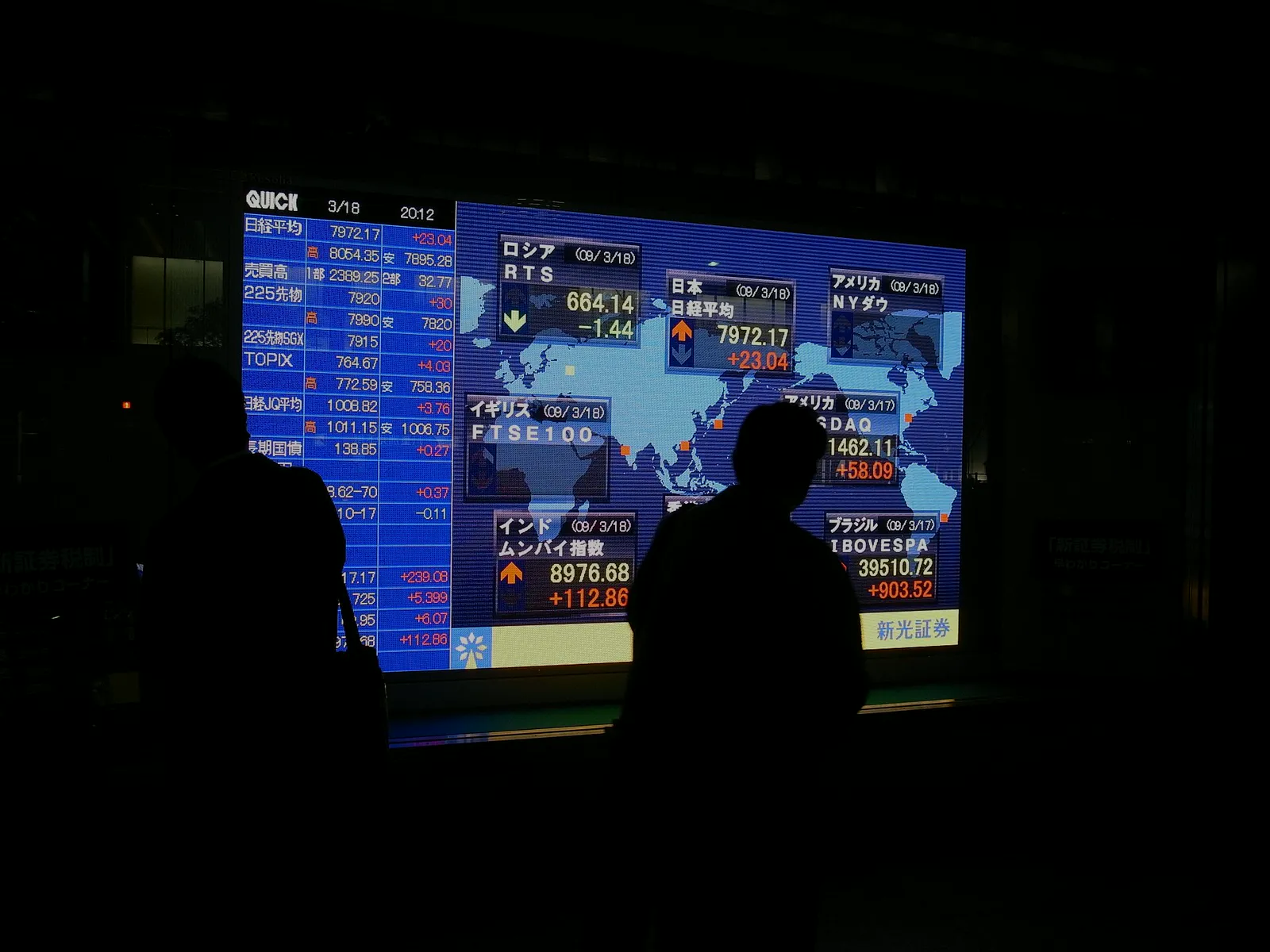
For a week, investors have been marking down the companies at the centre of the artificial-intelligence boom, and on Friday the selling went global. Chipmakers in Taipei, Seoul and Tokyo had their worst sessions in months. In New York the technology-heavy Nasdaq fell 5.3%, wiping out its gain for the year, and the S&P 500 and the Dow closed in a correction.
It is important to be precise about what kind of fall this is. It is concentrated in AI and semiconductor stocks. Broader indices are down less, some assets have barely moved, and the companies at the centre of the sell-off are, for now, still reporting rising sales. This is a reassessment of what the AI boom is worth, not evidence that it has stopped.
What happened in the markets
All figures below are Friday 20 November closing prices. This article was first published while US markets were open and has been updated with the closes.
| Market | Move | When |
|---|---|---|
| Nasdaq Composite | −5.3%, to 22,617.73 | Friday close |
| S&P 500 | −3.7%, to 6,910.39 | Friday close |
| Dow Jones Industrial Average | −1.9%, to 48,147.33 | Friday close |
| Taiex (Taiwan) | −6.2%, to 36,033.29 | Friday close |
| Kospi (South Korea) | −5.2%, to 4,869.96 | Friday close |
| Nikkei 225 (Japan) | −5.1%, to 56,436.65 | Friday close |
| Shanghai Composite | about −1.2% to −1.4% | Friday close |
Friday’s fall came on top of Thursday’s, when the S&P 500 closed 2.0% lower at 7,175.83 and the Nasdaq 2.3% lower. Over the week, CNBC put the S&P 500 down almost 9%, the Nasdaq about 10% and the Dow about 8%. The Nasdaq is now about 2.7% lower than at the start of 2026, according to CNBC.
The selling accelerated through the afternoon. At midday the Nasdaq was down about 3% to 3.5% and the S&P 500 about 2%; both roughly doubled those losses by the close. The Vix volatility index briefly touched 40, according to Yahoo Finance.
The gap between the indices tells the story. The Nasdaq is dominated by technology companies; the Dow, which is weighted by share price and holds fewer chip stocks, fell far less.
Why technology and AI stocks are falling
Several pressures are acting at once, and the sources do not single out one trigger.
Doubts about the return on AI spending. The largest technology companies are spending hundreds of billions of dollars on data centres. Investors have priced in that this spending keeps growing and eventually pays off. Any doubt about either point hits the companies that supply it, as our explainer on AI infrastructure spending describes.
Good news that did not help. NVIDIA reported on 17 November that third-quarter revenue more than doubled to $115.8 billion and forecast about $130 billion for the current quarter. Its shares have fallen since. When strong results are followed by falling prices, the market is usually questioning the future and the price already paid, not the present.
Interest rates. The Federal Reserve raised rates in September and held them in October, with two officials wanting another rise. CNBC reports that traders now see a growing chance of a rise in December. Higher rates reduce the present value of profits expected far in the future, which matters most for fast-growing technology companies. Our guide to how interest rates move markets explains the mechanism.
Company-specific shocks. NVIDIA’s chief executive, Jensen Huang, resigned on 12 November; the company’s filing gave no reason, and chief financial officer Colette Kress is interim CEO while the board searches for a successor. An analyst quoted by CNBC said the leadership uncertainty adds another layer of risk. AMD has fallen sharply over two sessions after a short seller published a report on the company. AMD has rejected its claims, and Kazamuki has not verified them.
A report on NVIDIA’s accounting. On Friday afternoon Reuters reported, citing two people briefed on the matter, that the US Securities and Exchange Commission is examining possible accounting issues at NVIDIA. The SEC declined to comment and NVIDIA did not immediately respond. The report is unconfirmed and does not say what the inquiry covers; Kazamuki has not verified it. It coincided with the sharpest part of the day’s fall in NVIDIA’s shares.
The Anthropic debut. Anthropic priced its shares at $83 on Wednesday, raising about $81.3 billion, and they closed 17% higher on their first day. On Friday they fell about 9%, to about $88, still above the offer price. CNBC attributes the fall to profit-taking and says it is pressuring the broader AI trade. The listing did not start the sell-off, which was already under way; at most its fade has added to the mood.
The companies exposed
Not every AI company is exposed in the same way.
- Chip designers and suppliers such as NVIDIA, AMD and Broadcom sell directly into data-centre budgets. At Friday’s close NVIDIA was down about 13–14%, at about $125.5, AMD about 13% and Broadcom about 12%.
- Memory makers such as Micron, Samsung Electronics and SK hynix earn record profits when prices are high but are among the most cyclical businesses in manufacturing. Micron fell about 14%; Samsung and SK hynix fell 6–7% in Seoul.
- Manufacturers and equipment makers sit further up the chain. TSMC, which makes most of the world’s advanced chips, fell 4.8% in Taipei; Tokyo Electron fell 7.1% and Advantest 10.3%. In Europe, ASML, which makes the machines that print chips, fell about 6%.
- The spenders, such as Microsoft, have fallen far less: about 3% on Friday. For them AI spending is a cost as well as an opportunity, and investors are weighing both.
How the sell-off spread around the world
Asia’s chip-heavy markets felt it most. Taiwan’s Taiex lost 17.5% over the week, its worst week in decades; outlets date the comparison differently, to 1991 or 1997. South Korea’s Kospi lost about 8% over the week and Japan’s Nikkei about 8%. SoftBank Group, a major AI investor, fell 14.5% in Tokyo.
The reason is concentration. Semiconductors account for a large share of exports and stock-market value in Taiwan and South Korea, as we explained in our pieces on the semiconductor supply chain and Korea’s memory-chip boom. When investors cut their AI expectations, those markets reprice as a whole. Chinese shares, less tied to the US AI supply chain, fell far less.
Crypto, bonds, gold and oil
The cross-asset picture is mixed, and not quite what a textbook panic would look like.
- Government bonds behaved as a refuge: the 10-year US Treasury yield fell to about 4.9% on Friday as prices rose.
- Gold did not. Gold futures fell about 4%, and spot gold reached its lowest since September 2025. CNBC links this to a firmer dollar and expectations of a December Fed rate rise; selling to raise cash elsewhere may also play a part.
- Bitcoin fell below $60,000 for the first time since July, and ether lost about 6%.
- Oil edged up: US crude settled 0.9% higher at $83.98 a barrel. This is an equity story, not an economic shock reaching every market.
Is this a crash?
A rough vocabulary helps. A sell-off is a sharp fall over days. A correction is a fall of at least 10% from a recent peak. A bear market is a fall of 20% or more. A crash is a very sudden, very deep fall, usually across almost every asset.
On Friday the S&P 500 and the Dow both closed more than 10% below their record closes, which is a correction. The S&P 500’s record close, according to Yahoo Finance, was 7,818.93 on 6 October; Friday’s close is about 11.6% below it. The Nasdaq-100 briefly fell 20% from its peak during the day, which is bear-market territory, and many chip stocks are far further down. The evidence so far points to a sector-led correction, not a systemic crisis: bond markets are functioning, oil is calm, and there are no reports of strain in the banking system.
It also helps to remember that falling market value is not cash leaving the market. When a share price drops, the value of every share is marked down, but only the shares actually traded change hands. Headlines about “trillions wiped out” describe a change in prices, not money destroyed.
What happens next
These are scenarios, not predictions.
- Stabilisation: if the largest cloud companies reaffirm their spending plans and the Fed sounds less eager to raise rates, the selling could ease.
- A longer repricing: if spending forecasts are cut or rates rise further, chip valuations could keep falling even while profits grow.
- Spillover: a broader economic problem would show up first in credit markets and in the Federal Reserve’s response. So far there is no sign of it.
Worth watching: Monday’s open in Asia and New York, any statement from NVIDIA or the SEC on the reported inquiry, the Fed’s December decision, the Vix volatility index staying above 30 or falling back, and NVIDIA’s search for a permanent chief executive.
The Kazamuki takeaway
One set of expectations, about how much the world will spend on AI and what that spending will earn, sits underneath share prices in New York, factories in Taiwan, exports from Korea and the trading floor in Tokyo. This week investors marked those expectations down, and every market built on them moved together. Following the connections between those markets and companies is more useful than a single headline number. The sell-off is real and broad within its sector; it is not, on the evidence so far, a collapse of the wider economy.