
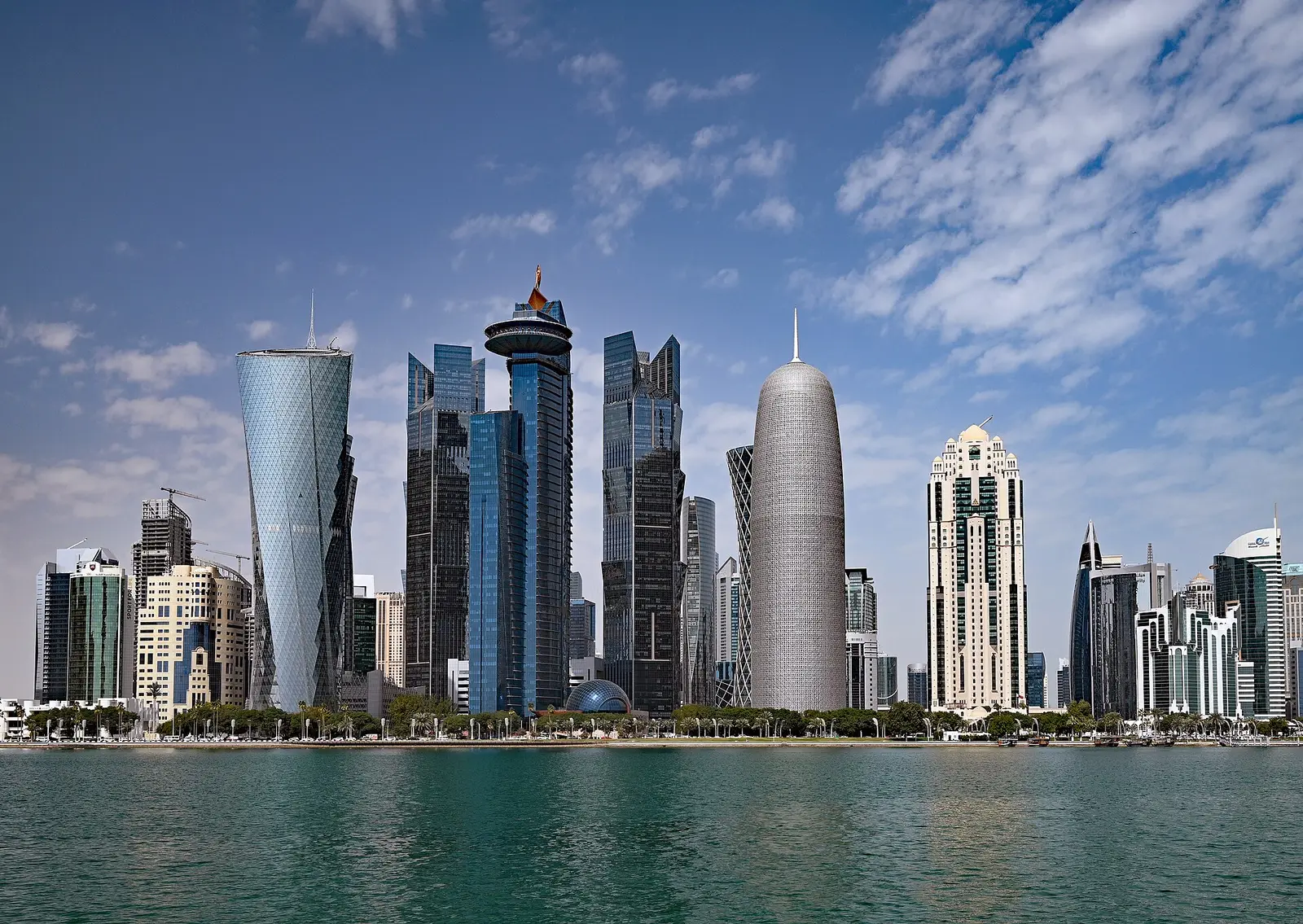

Mention the Gulf and finance in the same sentence and most people think of oil money being invested abroad. That is still a large part of the story, and our explainer on sovereign wealth funds covers it. But over the past decade the region has also been building something else: financial markets and business centres of its own.
This piece looks at what exists, using the institutions’ own reports, and at what a hard year is revealing.
A stock market open to the world, with limits
The Saudi Exchange is by far the largest in the Middle East. At the end of 2025 the companies listed on it were worth about SAR 8.9 trillion, enough to rank it 13th among the world’s exchanges, and 52 new listings joined during the year. Much of that value is a single company: Saudi Aramco, of which the state owns the great majority.
For years, foreigners could buy Saudi shares only if they qualified as large institutions or used indirect arrangements. From 1 February 2026 that system was abolished, and any foreign investor may now buy shares on the main market directly.
“Open” needs a footnote. Under the regulator’s rules, a single foreign investor living outside the kingdom may not own 10% or more of a listed company, and foreigners together may own no more than 49%, with exceptions for strategic investors. Officials of the regulator have said publicly, according to press reports, that the limits are under review. Until they change, the market is accessible but not unrestricted.
The timing has been unkind. The Saudi share index fell by 12.8% in 2025, according to the exchange’s own statistics.
Dubai and Abu Dhabi
The United Arab Emirates took a different route: purpose-built financial districts with their own courts and regulators, operating under English-style commercial law.
The older of the two, the Dubai International Financial Centre, reported 8,844 active companies at the end of 2025, up 28% in a year. They included more than 500 wealth and asset managers, of which 102 were hedge funds, and more than 290 banks and capital-markets firms. About 50,000 people work there.
Abu Dhabi Global Market is younger and smaller but growing fast; it reported assets under management up 42% in the year to mid-2025.
Two policy changes helped. The UAE introduced a federal tax on corporate profits for financial years starting from June 2023, which brought it closer to international norms, and it has worked to strengthen its controls on illicit finance.
These are the institutions’ own figures, and a count of registered firms is not a measure of the business they do. But the direction is consistent across several years.
The banks
Behind the markets stand some very large banks. First Abu Dhabi Bank, the UAE’s biggest, had assets of AED 1.40 trillion at the end of 2025 and earned a net profit of AED 21.1 billion. In Saudi Arabia, Saudi National Bank reported net income of SAR 25.0 billion for 2025 and Al Rajhi Bank SAR 24.8 billion, both records for the banks.
Two features are worth understanding.
First, these banks are closely tied to their governments. First Abu Dhabi Bank’s largest shareholder is Mubadala, a state investment company, and its accounts note that it operates in a market dominated by government-controlled entities. That is a source of stability and also of concentration.
Second, in Saudi Arabia lending has been growing faster than deposits. The IMF recorded credit growth of 10.2% in 2025 against 8.4% for the money supply. Banks have filled the gap by borrowing, including from abroad. The IMF asked the authorities to watch this closely, and the central bank is requiring banks to hold an additional capital buffer.
Because Gulf currencies are pegged to the dollar, these banks’ funding costs follow US interest rates, which rose in 2026.
Technology ambitions
Both countries have announced very large investments in artificial-intelligence computing, through state-backed companies and partnerships with American chip designers. It is right to be precise about their status. Published plans describe data-centre capacity measured in tens of megawatts starting from late 2026, rising to gigawatts by 2030, “subject to final agreements”. They depend on the United States licensing the export of advanced chips, part of the system described in our explainer on export controls.
These are intentions backed by substantial money. They are not yet operating businesses.
2026 as a stress test
Everything above was built in years of high oil income. 2026 has been different: the disruption in the Strait of Hormuz cut the volume of oil the Gulf could export. Saudi Arabia’s finance ministry reports a deficit of SAR 244.3 billion for the first nine months of 2026, already more than the SAR 165.4 billion planned for the whole year.
One detail in those budget numbers deserves attention. In the third quarter, oil revenue fell by about a quarter on a year earlier while non-oil revenue rose by a fifth; over the nine months, oil revenue was 1% lower and non-oil revenue 8% higher. That is the pattern diversification is supposed to produce. It is evidence from a year that is not over, and non-oil activity is still supported by state spending; but it is the kind of evidence that matters more than any announcement.
How to follow it
- For markets: foreign ownership and listing activity on the Saudi Exchange, and whether the ownership caps change.
- For the financial centres: their annual reports, and whether growth continues through a regional downturn.
- For banks: the gap between lending and deposits, and loan quality in results for 2026.
- For the bigger question of independence from oil: Saudi Arabia’s non-oil revenue and non-oil GDP once full-year figures are published.